head(cars) speed dist
1 4 2
2 4 10
3 7 4
4 7 22
5 8 16
6 9 10Quarto enables you to weave together content and executable code into a finished document. To learn more about Quarto see https://quarto.org.
There are lots of ways to make visualization and plots in R. These include, so-called “base R” (like the function plot()) and ggplot2
Let’s make the same plot with these two graphics systems. We can use inbuilt cars dataset.
head(cars) speed dist
1 4 2
2 4 10
3 7 4
4 7 22
5 8 16
6 9 10plot(cars)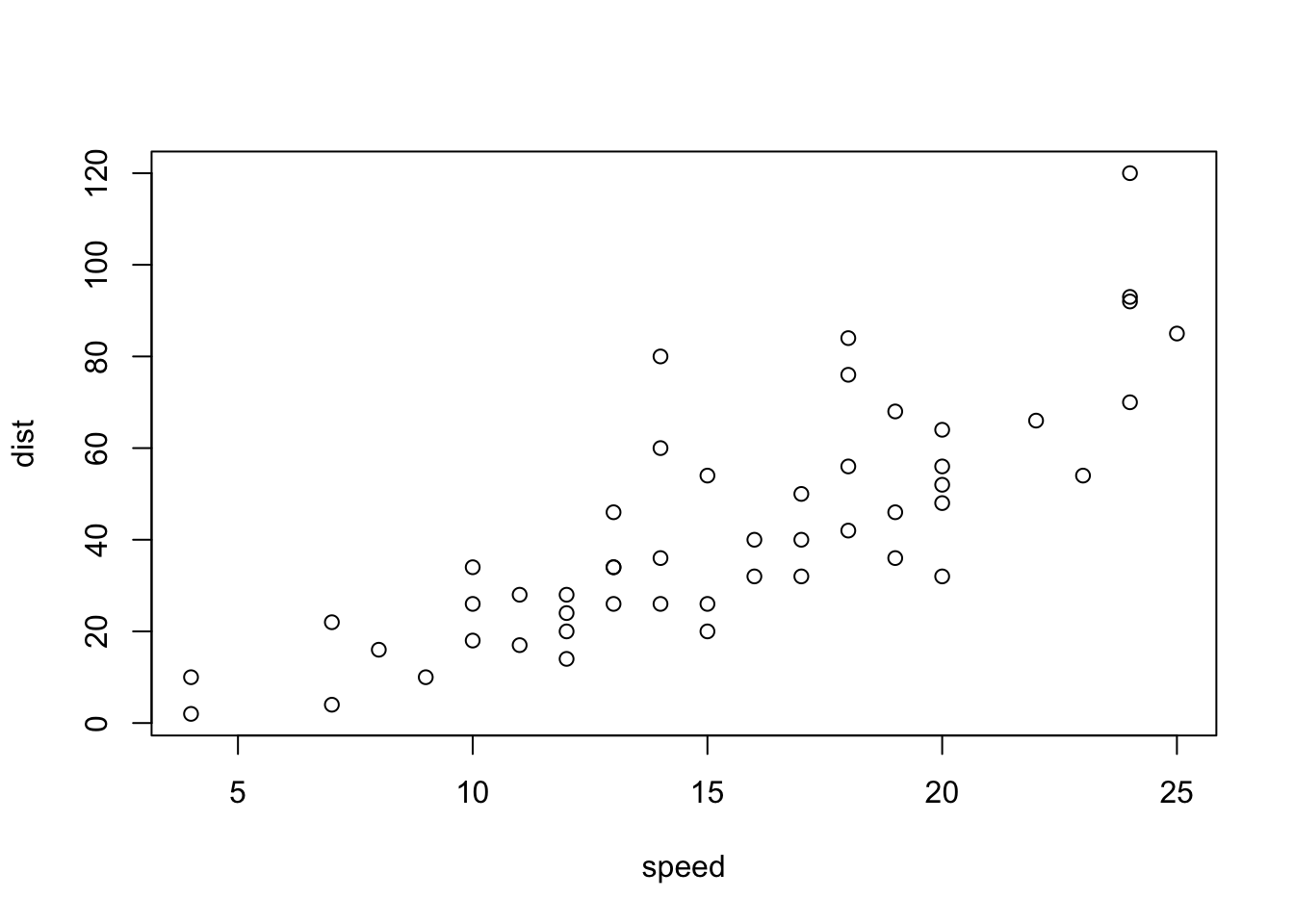
first you need to install ggplot using the command install.packages("ggplot2")
N.B We never run an install of packages in a code chunk otherwise we will reinstall needlesely every time we render our document
Everytime you want to use an add on packaged we need to load it up with a call to library()
library(ggplot2)
ggplot(cars)
Every ggplot needs at least 3 things:
ggplot(cars) +
  aes(x=speed, y=dist) +
  geom_point() +
  geom_smooth(method = "lm", se = FALSE) +
  labs(x="Speed (MPH)", y= "Distance(ft)", title = "stopping distance of old cars") +

  theme_dark()
`geom_smooth()` using formula = 'y ~ x'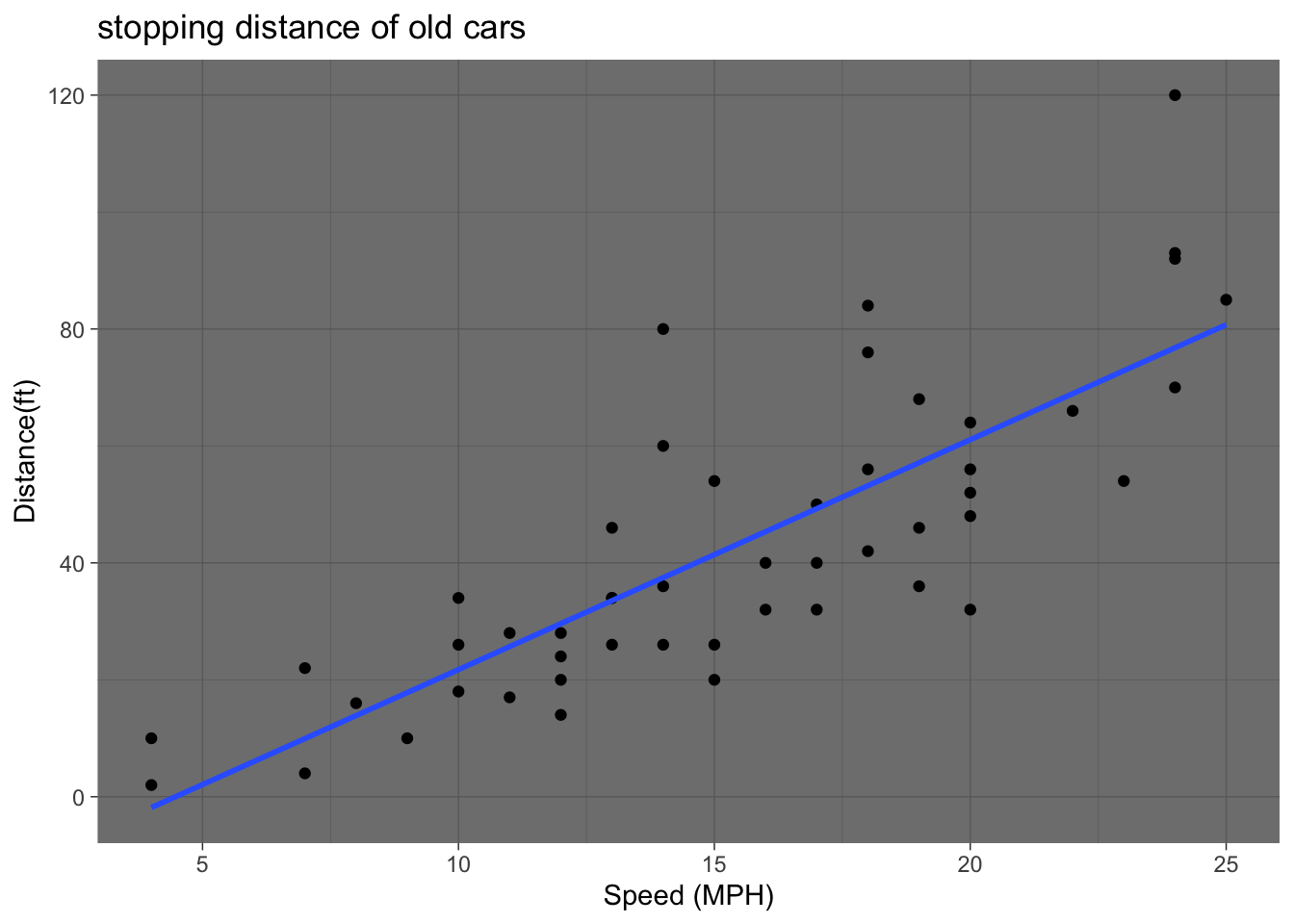
Read some fata on the effects of GLP-1 inhibitor drug on gene expression values
url <- "https://bioboot.github.io/bimm143_S20/class-material/up_down_expression.txt"
genes <- read.delim(url)
head(genes)
Gene Condition1 Condition2 State
1 A4GNT -3.6808610 -3.4401355 unchanging
2 AAAS 4.5479580 4.3864126 unchanging
3 AASDH 3.7190695 3.4787276 unchanging
4 AATF 5.0784720 5.0151916 unchanging
5 AATK 0.4711421 0.5598642 unchanging
6 AB015752.4 -3.6808610 -3.5921390 unchangingVersion 1 plot - start simple by getting some ink on the page!
table(genes$State)
      down unchanging         up
72 4997 127 ggplot(genes)+
aes(Condition1,Condition2, col= State)+
geom_point() +
scale_color_manual(values = c("purple","gray","orange")) +
labs(x="No Drug", y= "Drug Treatment", title = "Gene Expression Response to GLP-1 drug") +
theme_classic()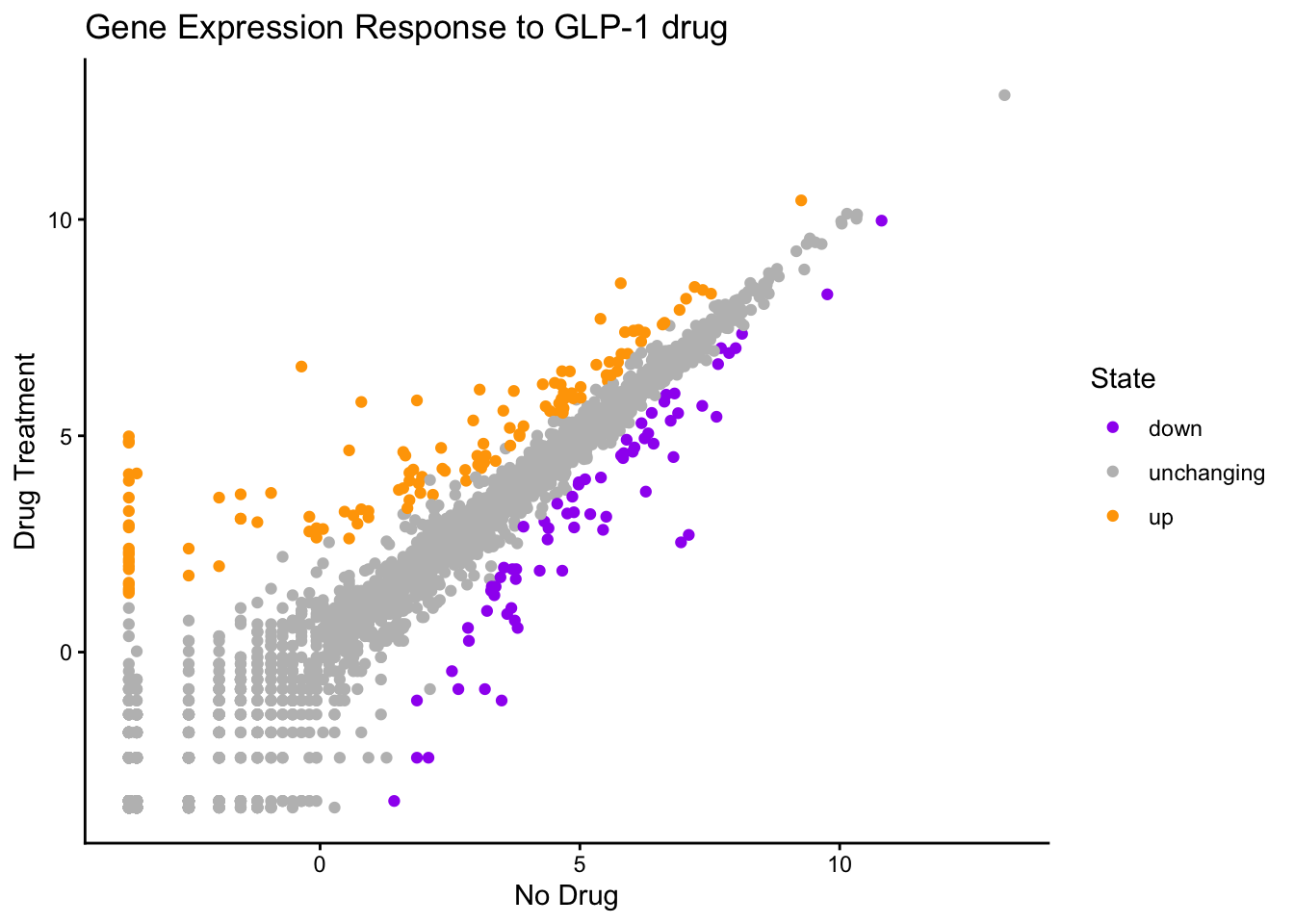
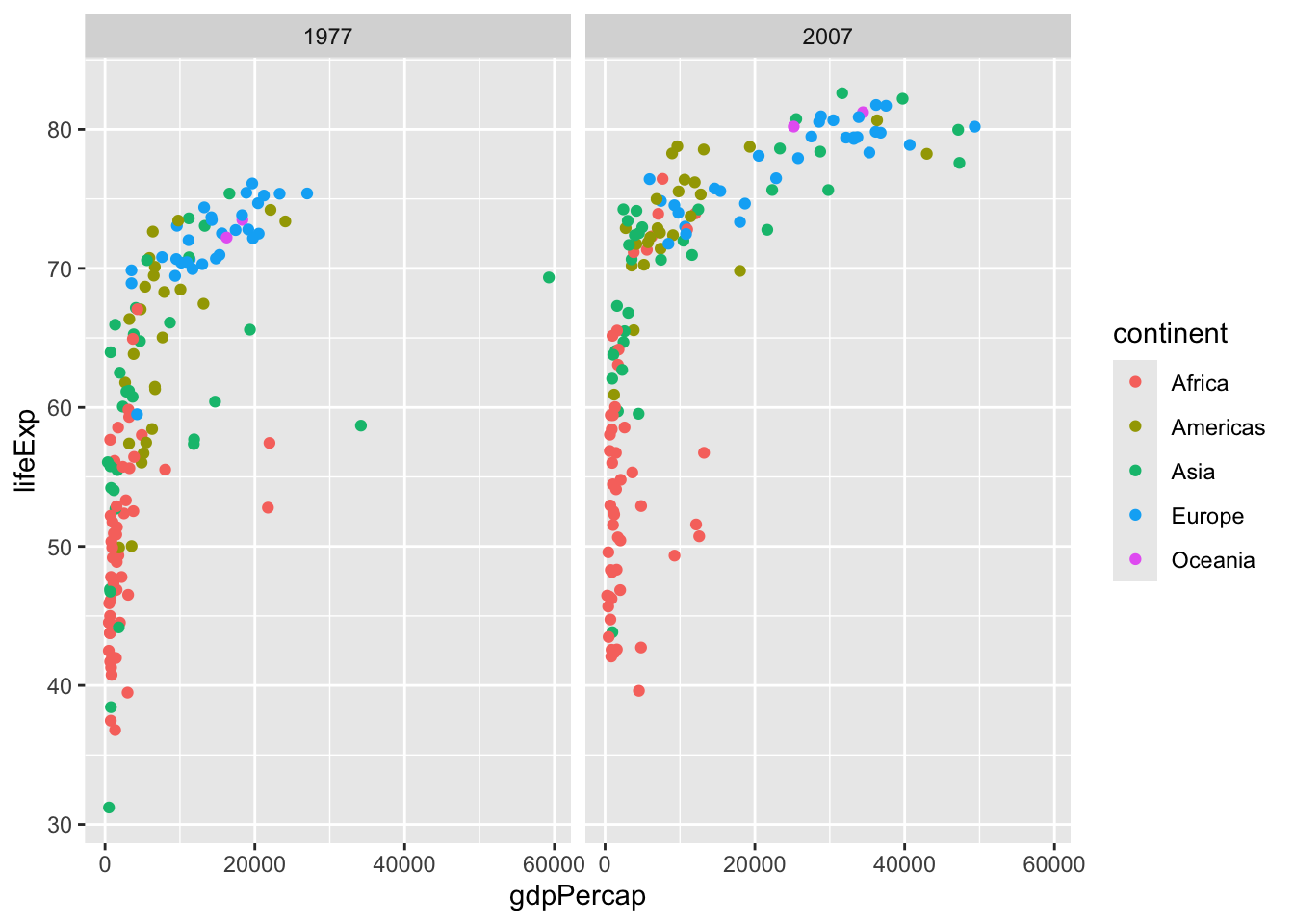
Here we explore the famous gapminder dataset with some custom plots
# File location online
url <- "https://raw.githubusercontent.com/jennybc/gapminder/master/inst/extdata/gapminder.tsv"

gapminder <- read.delim(url)
head(gapminder)
country continent year lifeExp pop gdpPercap
1 Afghanistan Asia 1952 28.801 8425333 779.4453
2 Afghanistan Asia 1957 30.332 9240934 820.8530
3 Afghanistan Asia 1962 31.997 10267083 853.1007
4 Afghanistan Asia 1967 34.020 11537966 836.1971
5 Afghanistan Asia 1972 36.088 13079460 739.9811
6 Afghanistan Asia 1977 38.438 14880372 786.1134Q. how many rows does this datasethave
nrow(gapminder)[1] 1704Q. how many different countries are in this dataset
table(gapminder$continent)
  Africa Americas     Asia   Europe  Oceania
     624      300      396      360       24
Version 1 plot GDP Vs Life Expectancy for all rows
ggplot(gapminder) +
  aes(x=gdpPercap, y=lifeExp, col=continent) +
geom_point() 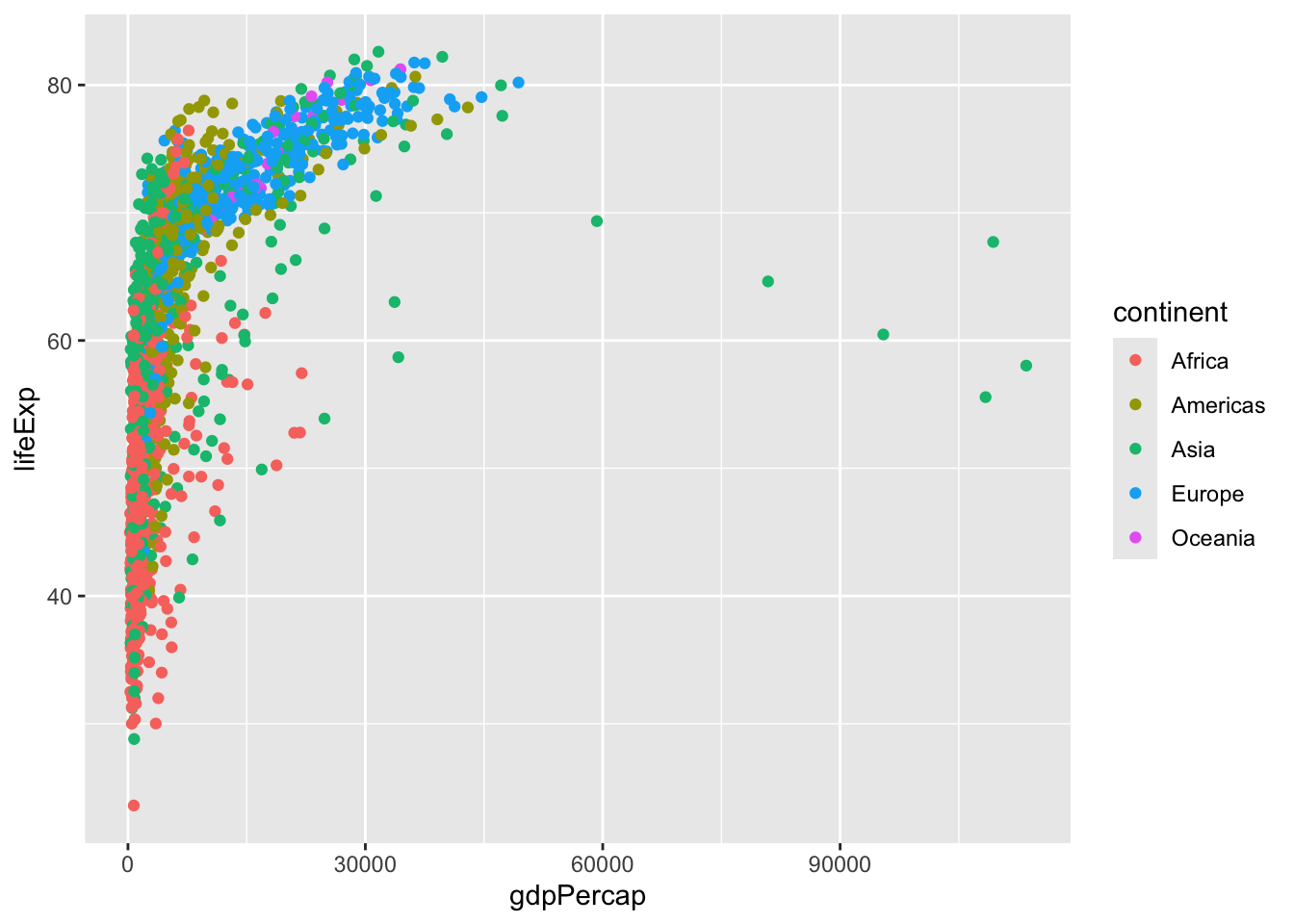
We want to see plots for each of the continents in ggplot lingo this is called “faceting”
ggplot(gapminder) +
  aes(x=gdpPercap, y=lifeExp, col=continent) +
  geom_point() +
  facet_wrap(~continent)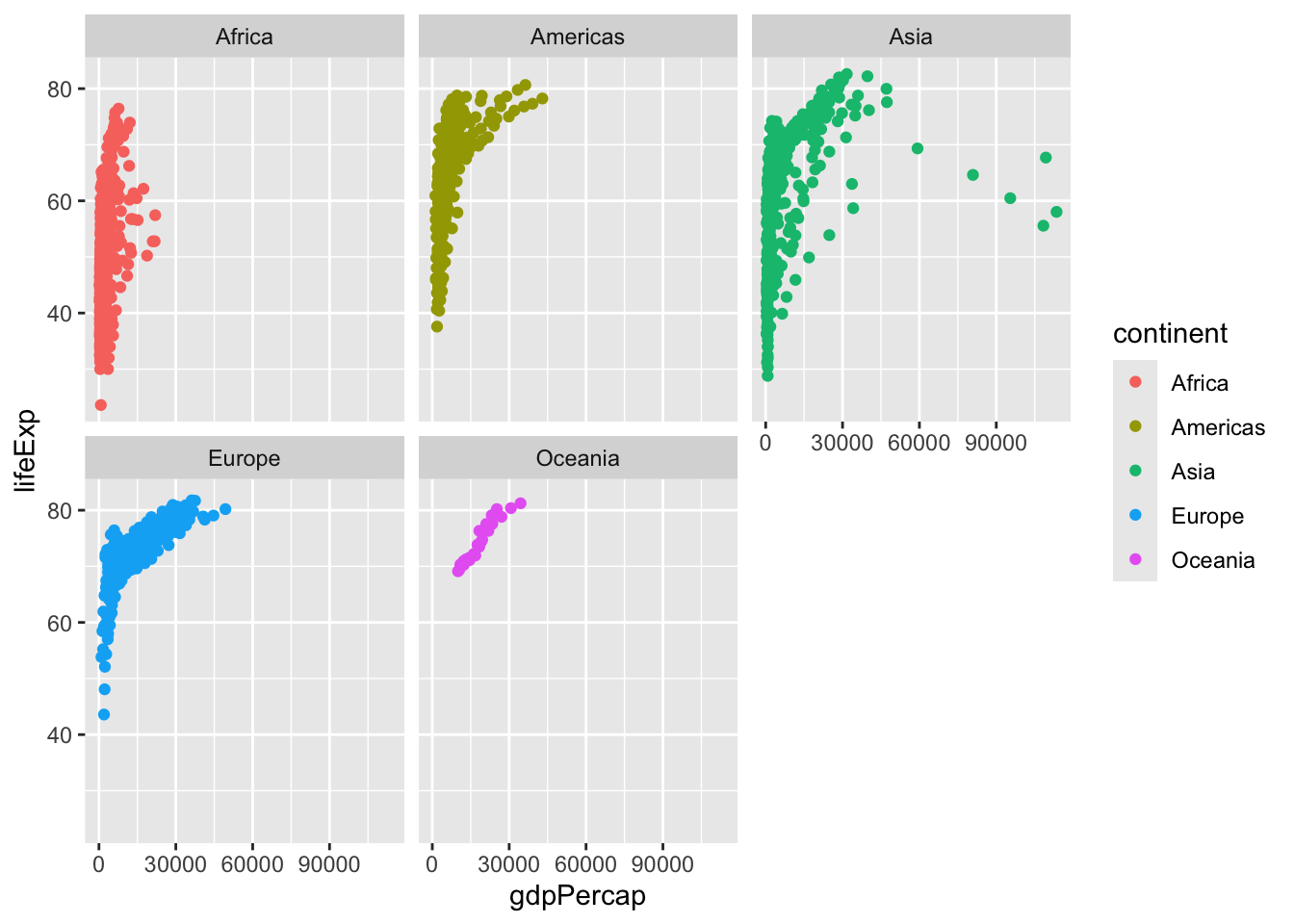
Another add on package with a function called filter that we want to use.
library(dplyr)
Attaching package: 'dplyr'The following objects are masked from 'package:stats':
filter, lagThe following objects are masked from 'package:base':
intersect, setdiff, setequal, unioninput <- filter(gapminder, year == 2007 | year == 1977 )
ggplot(input)+
aes(x=gdpPercap, y=lifeExp, col=continent) +
geom_point() +
facet_wrap(~year)